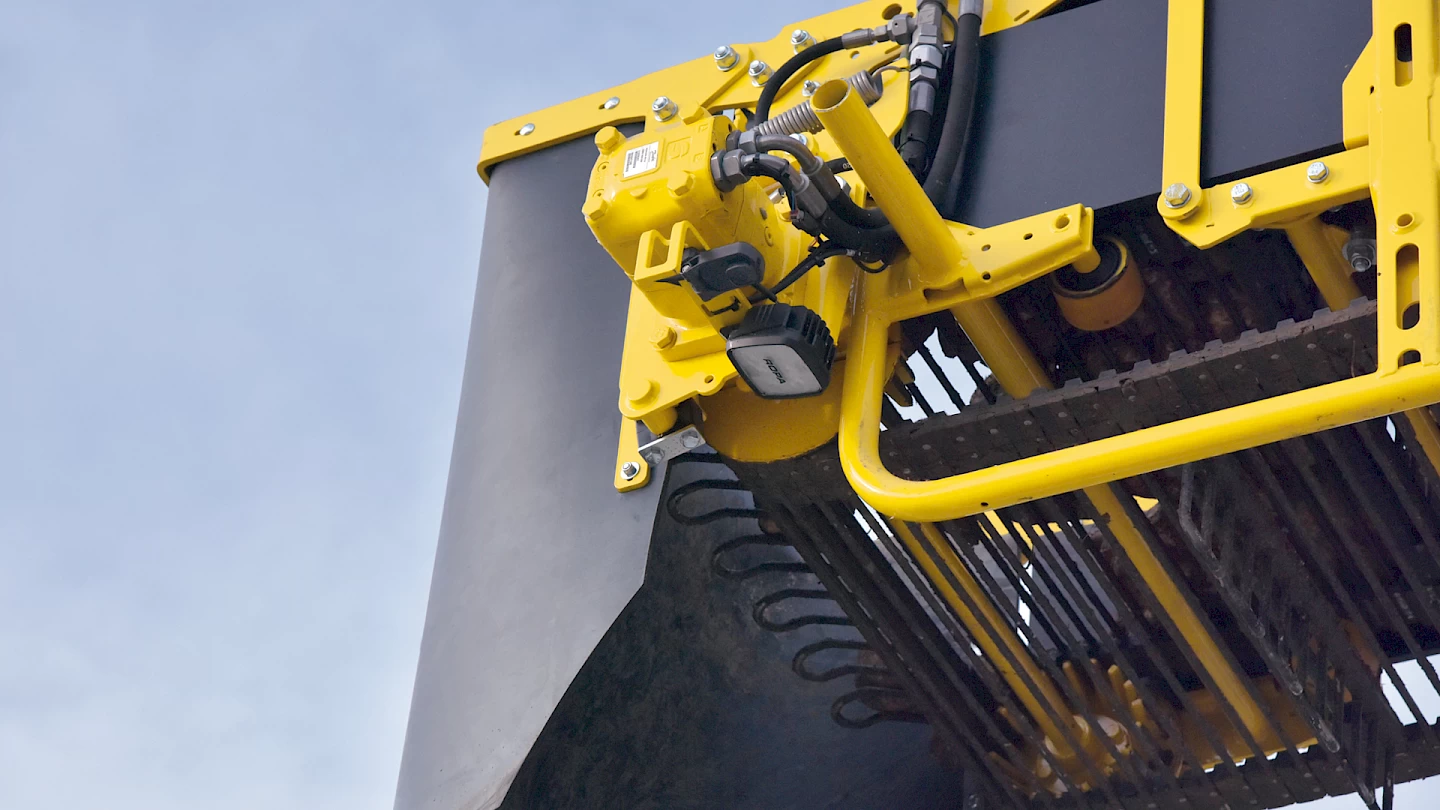
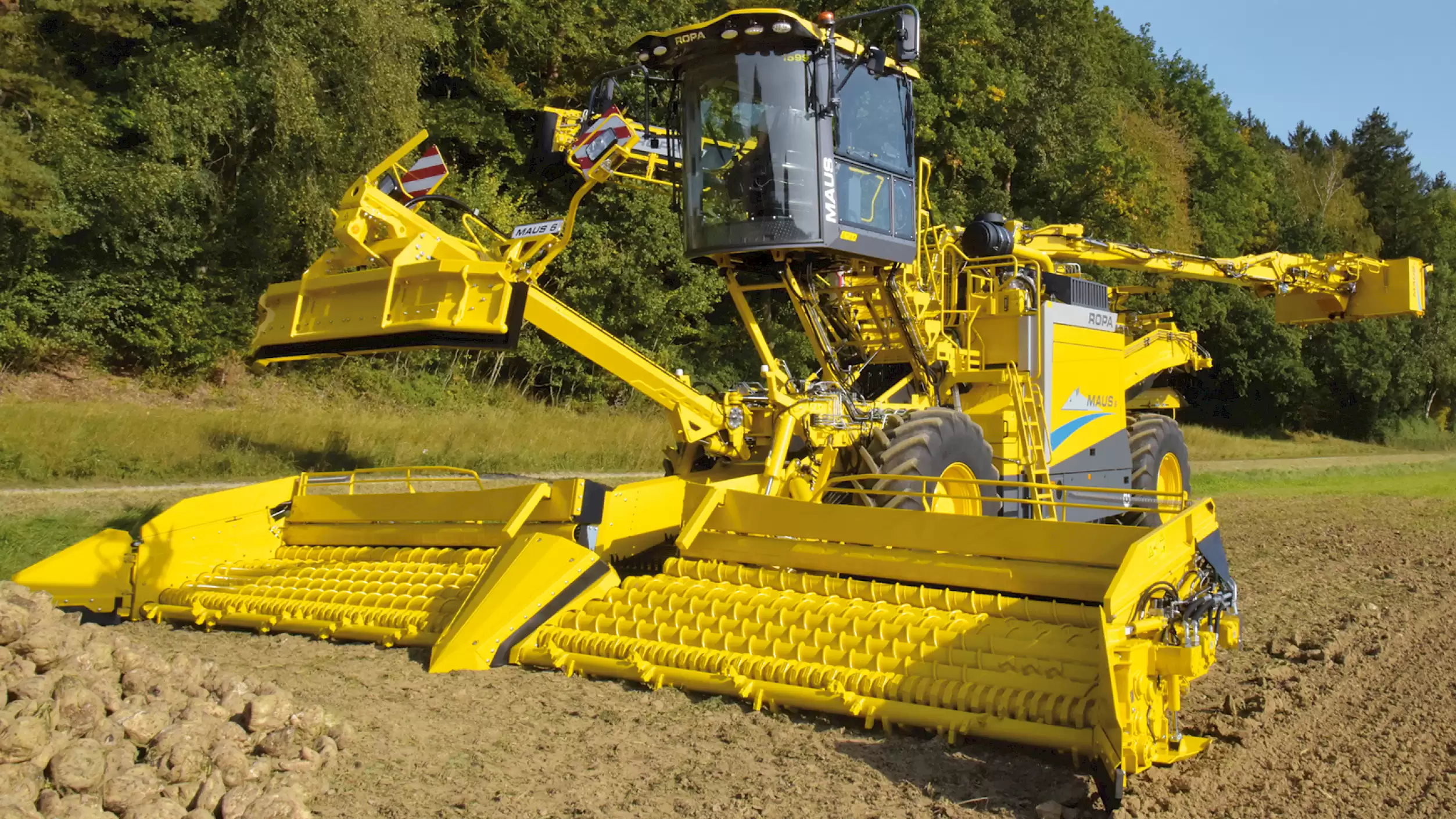
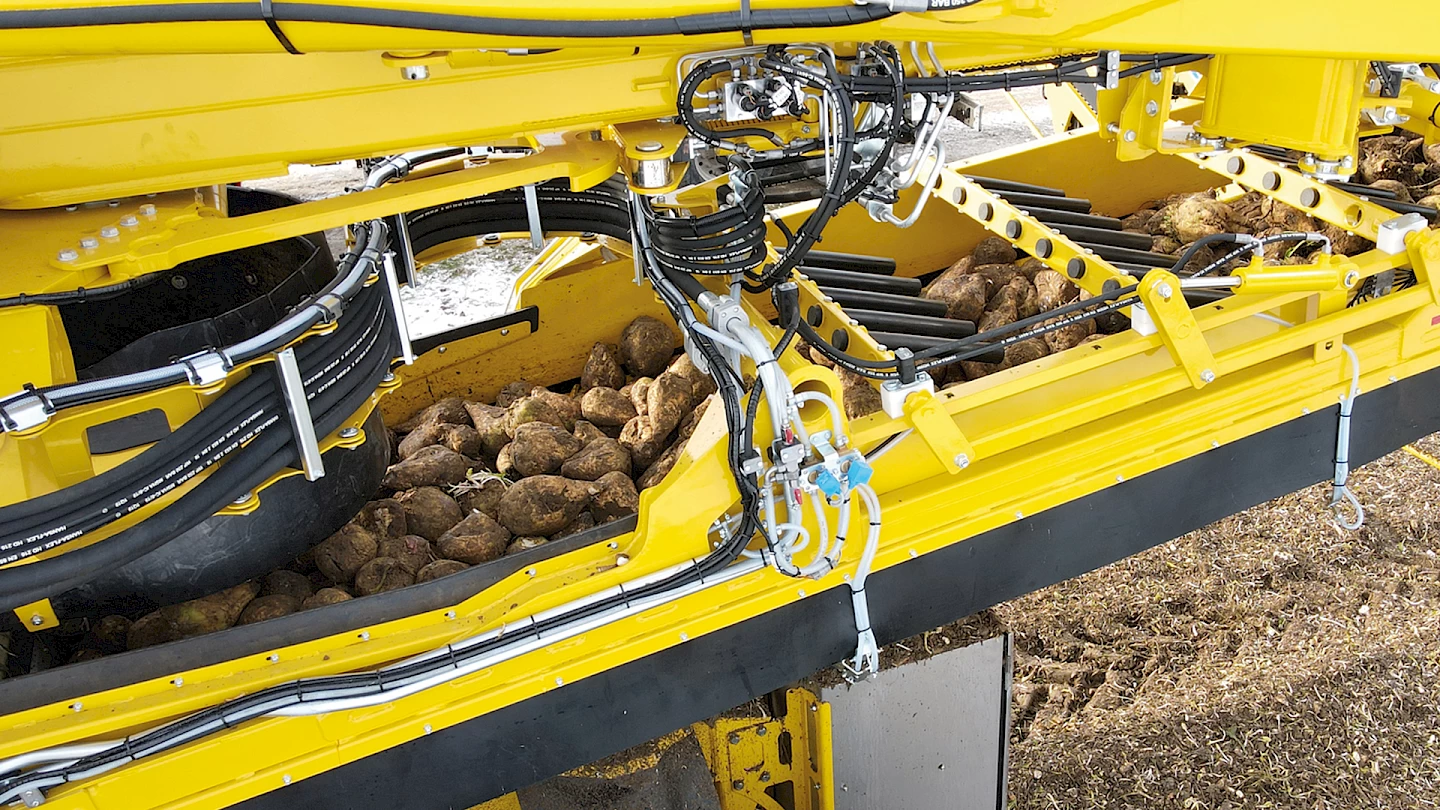
The robust pickup system has a total of 18 cleaning rollers for efficient soil and weed removal. It is the widest pickup system of all cleaner-loaders on the market. Depending on the level of cleaning required, the cleaning path in the pickup system can be adjusted in length and intensity from the operator cabin.
The Maus 6 can be folded out and in fully automatically through the activation of a single toggle switch.
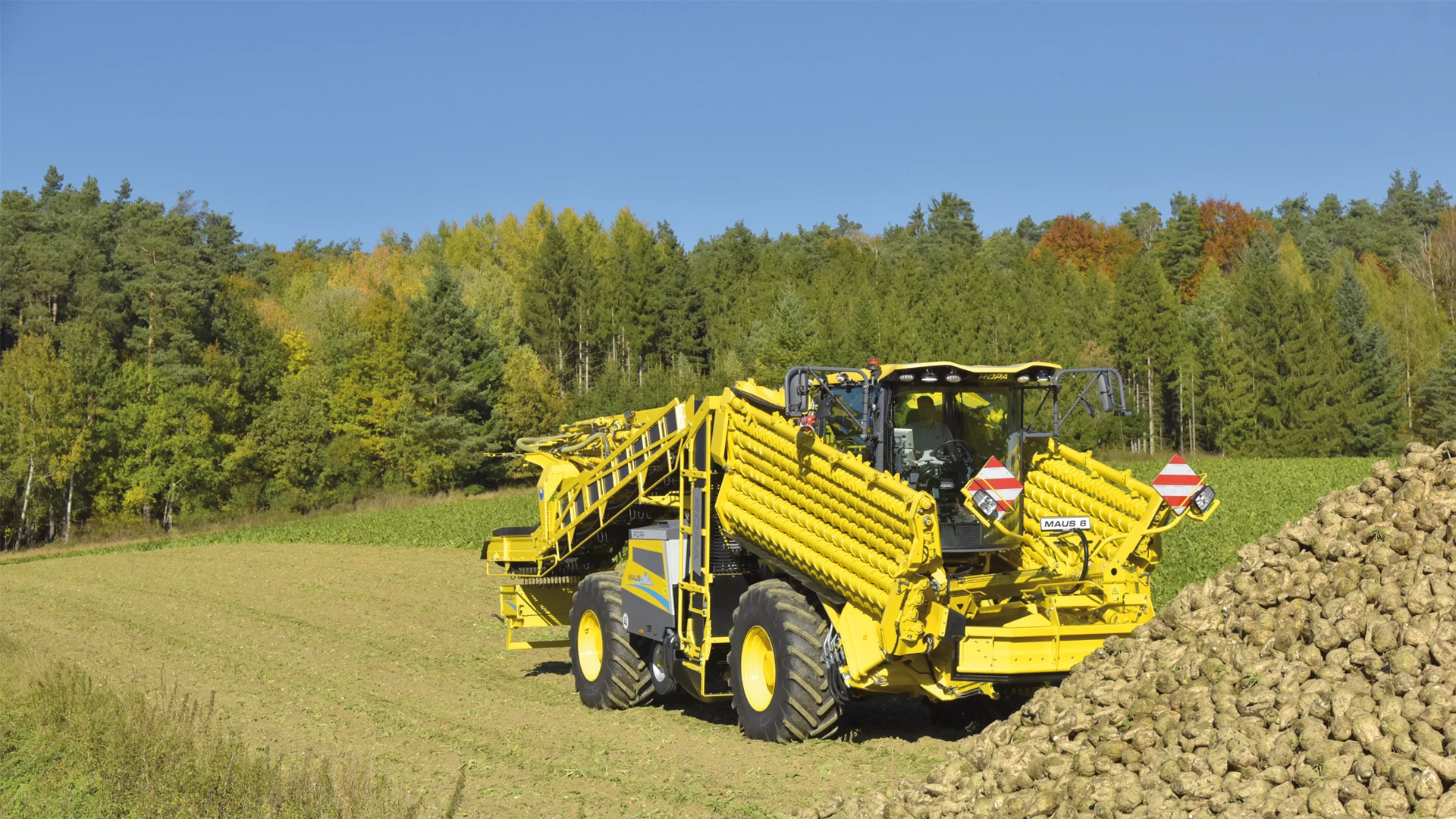
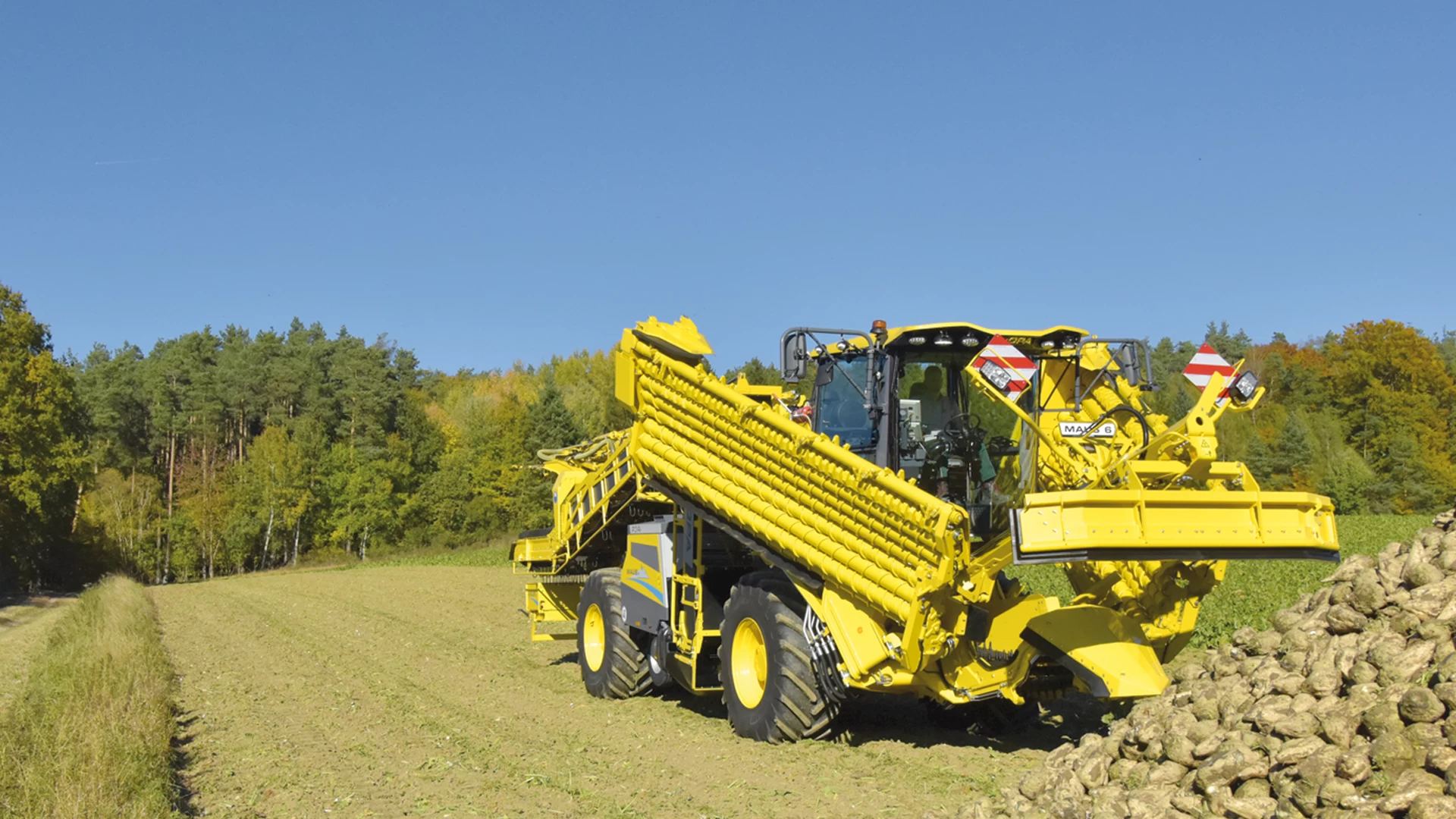
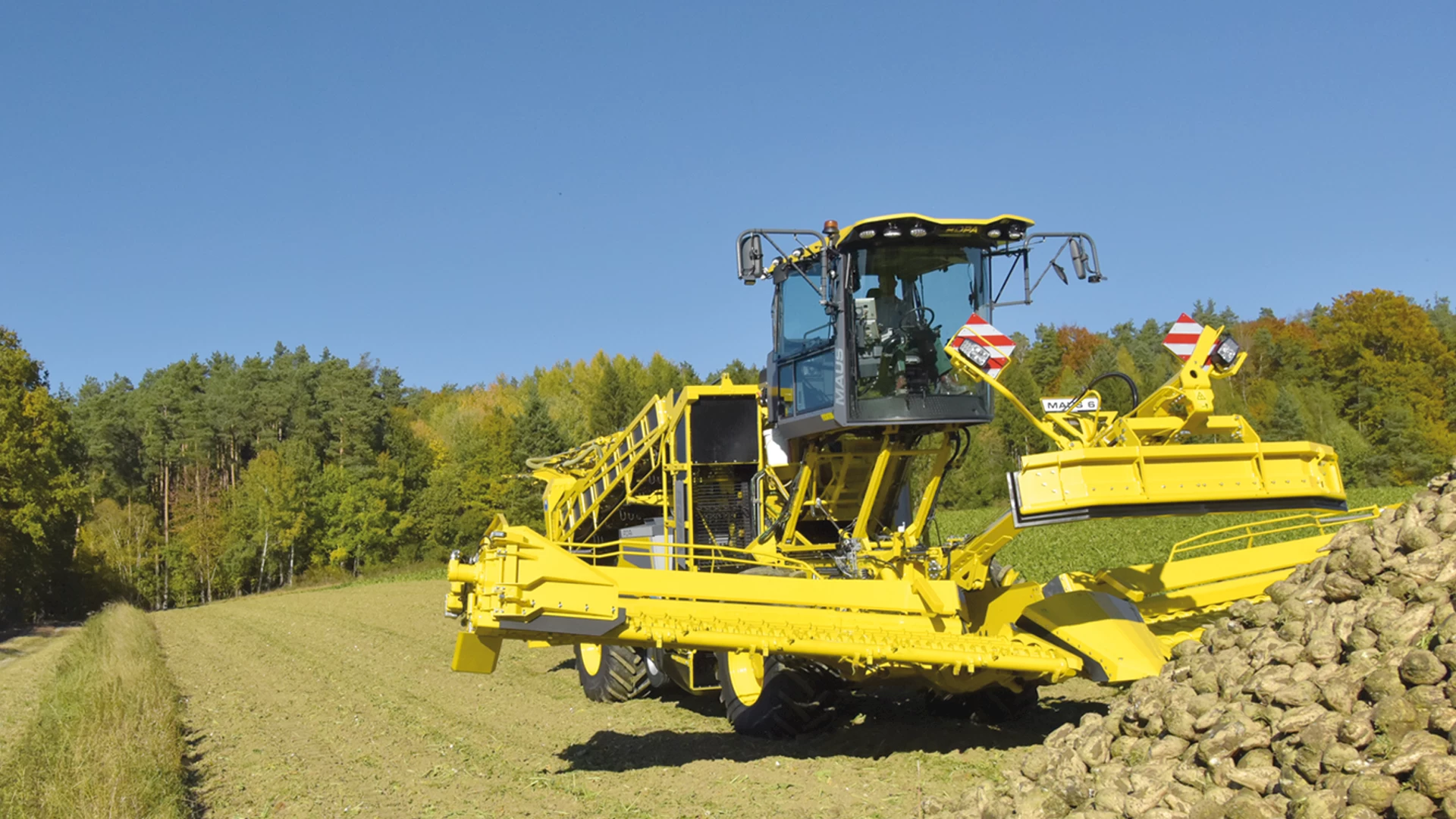
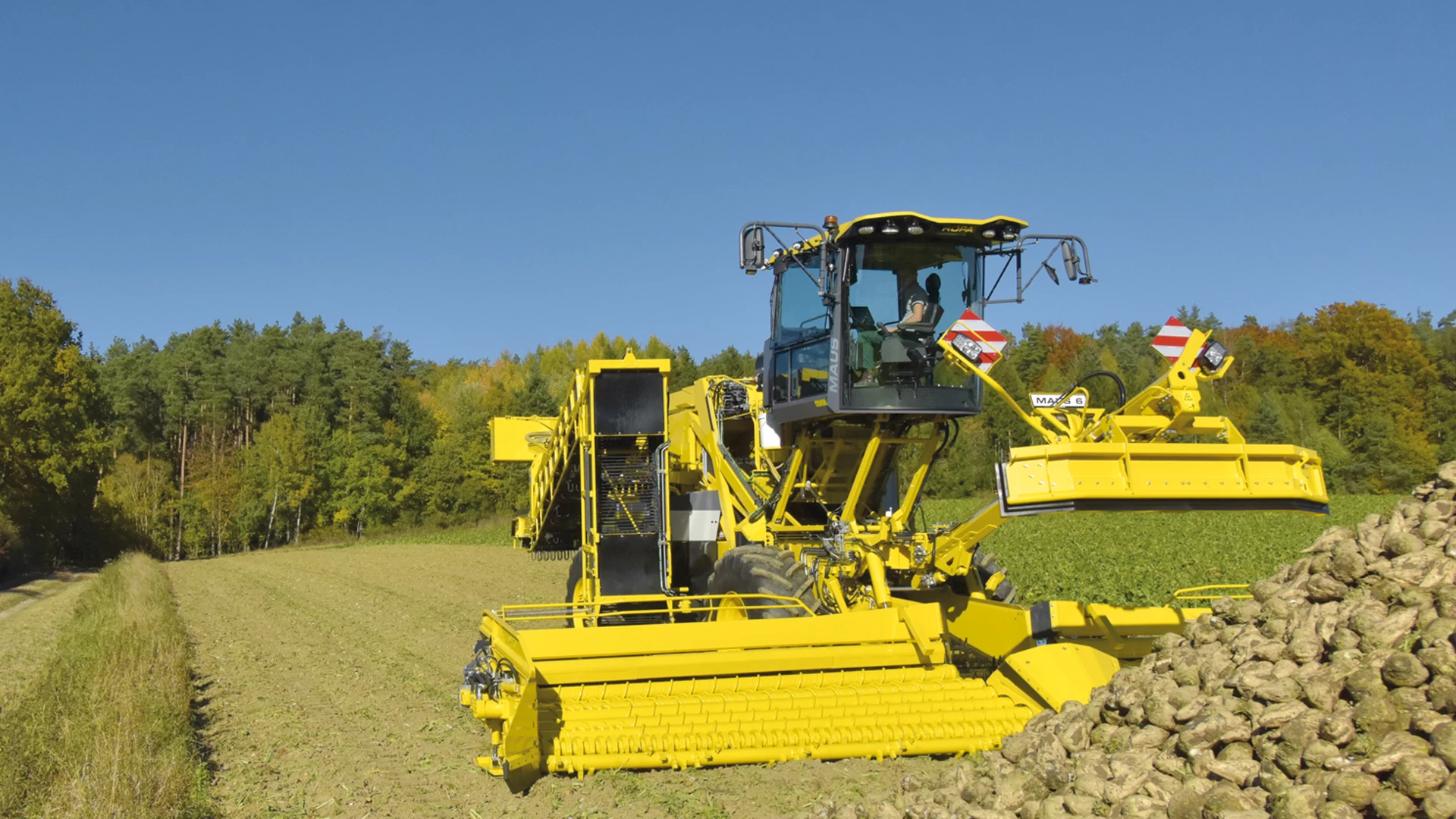
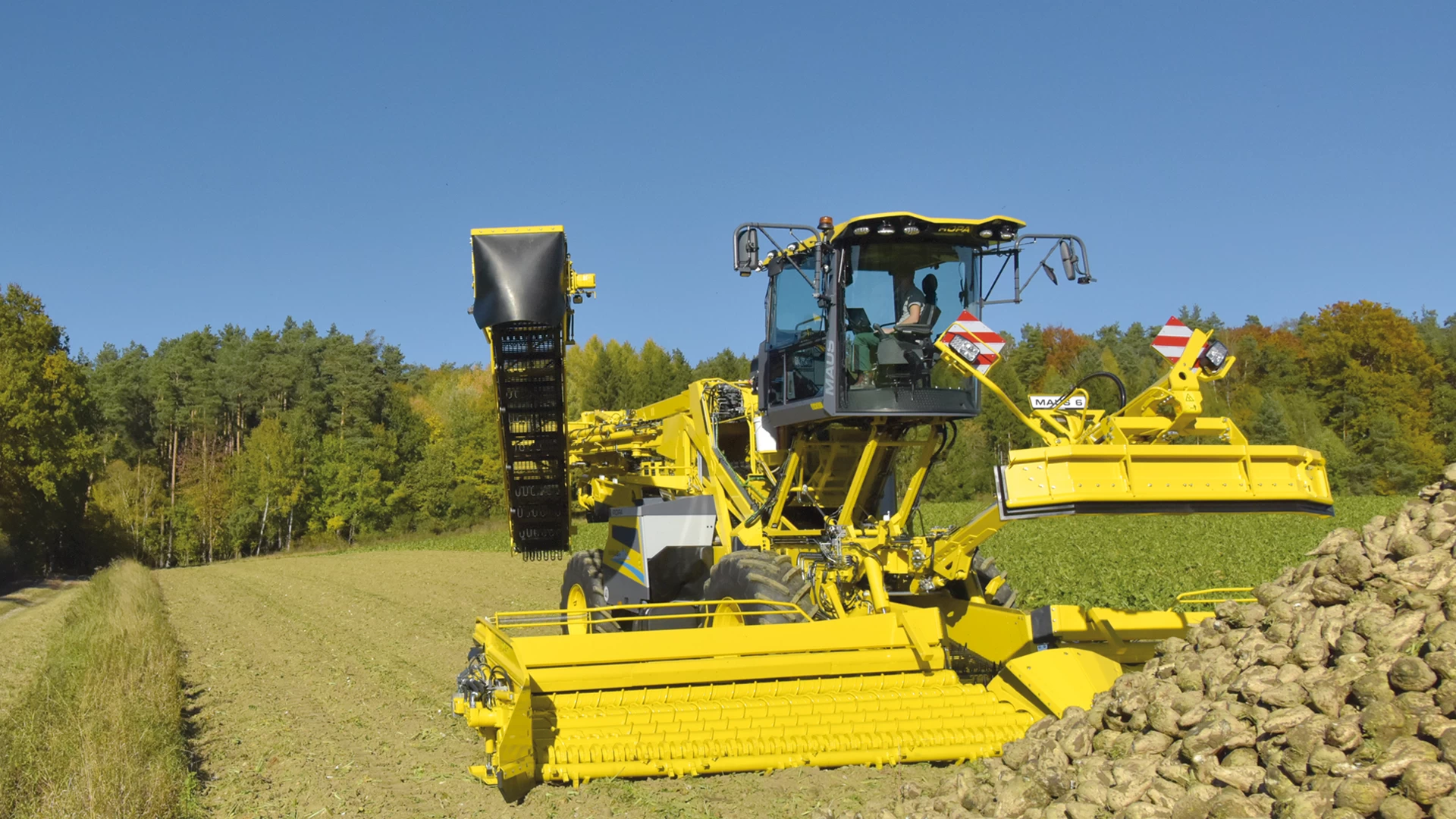
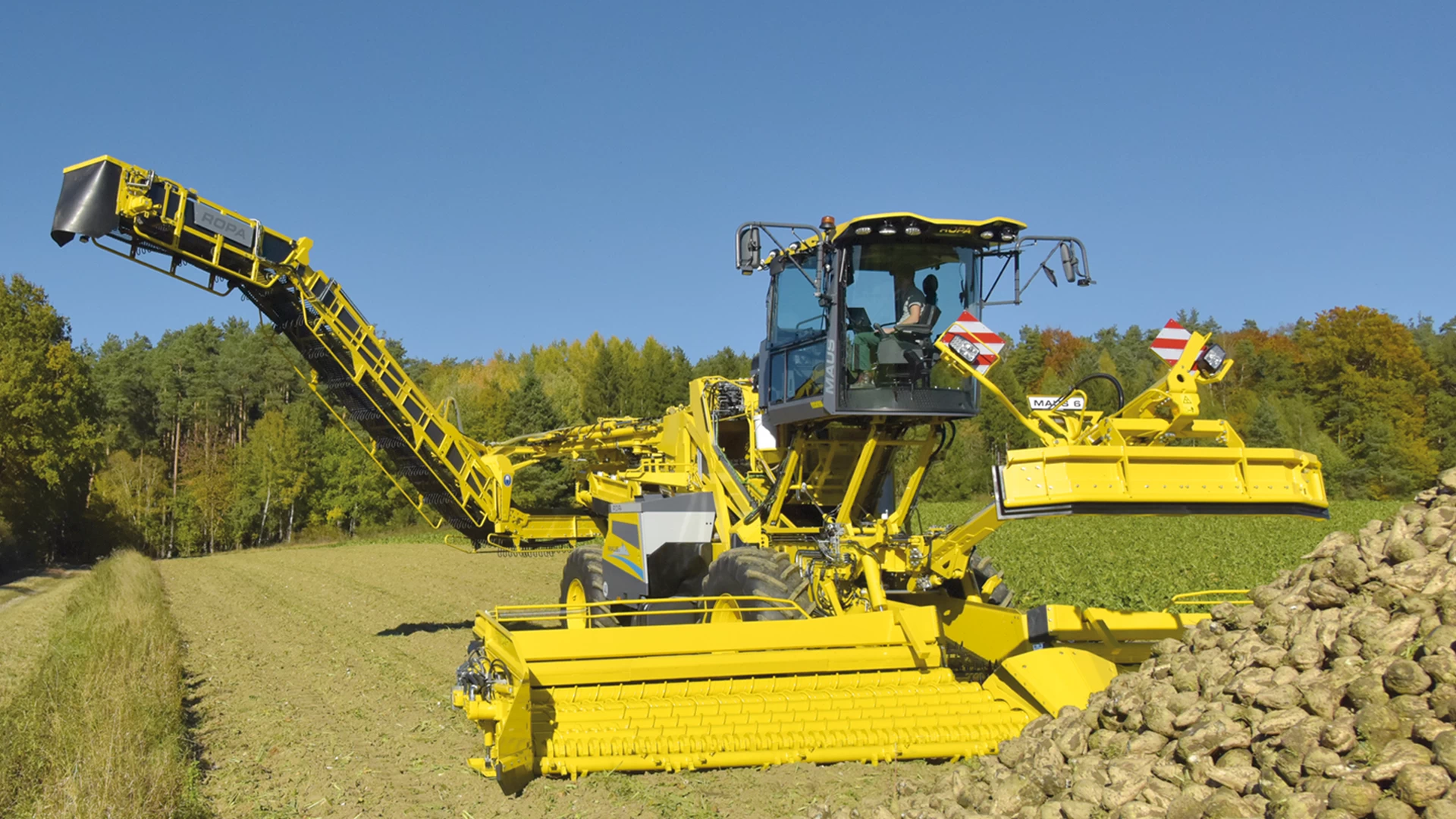
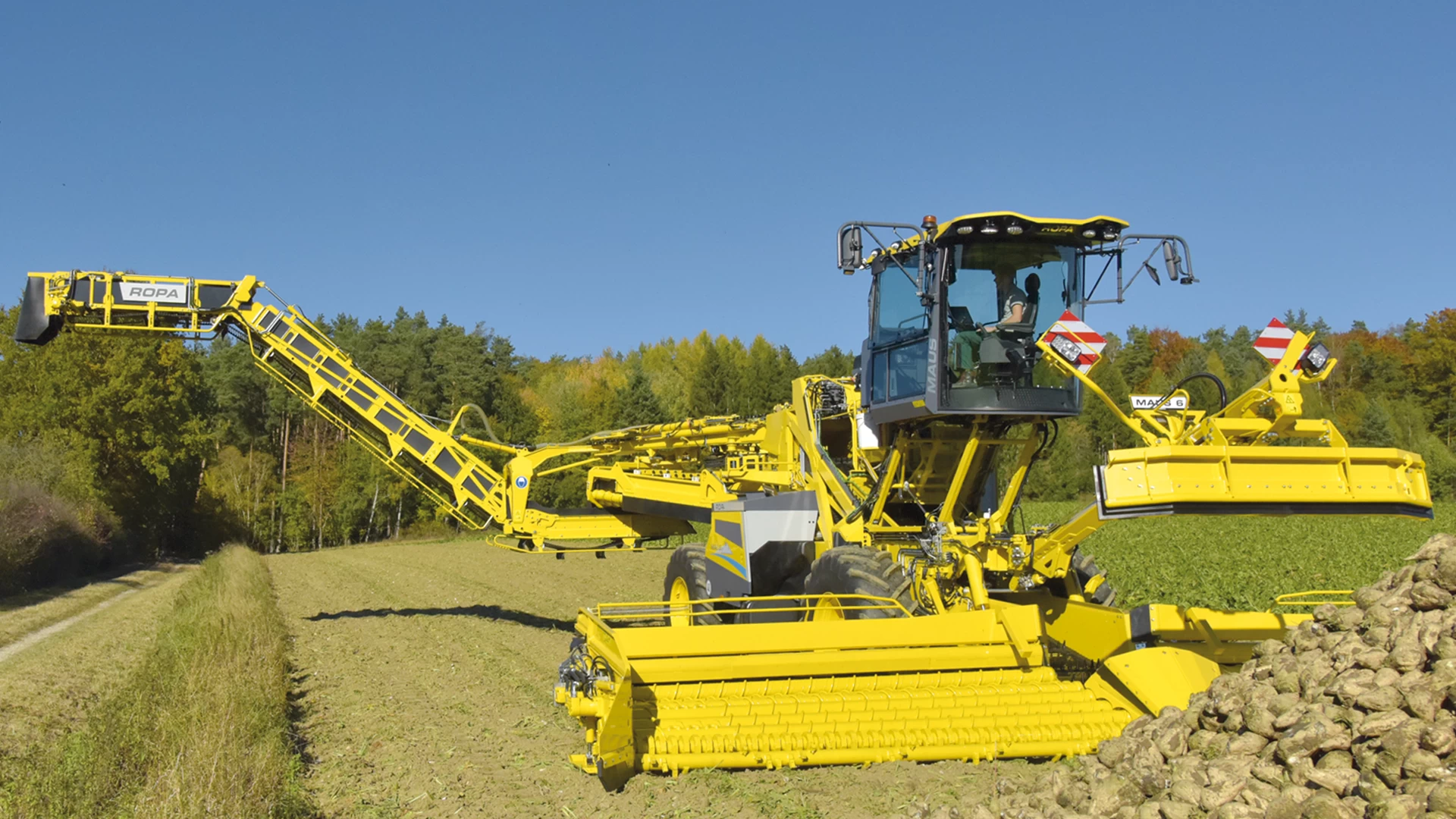
The annual operating capability of loaders is constantly increasing. Many machines operate in 24-hour shifts, and time for maintenance and parts replacement is limited and expensive. ROPA has once again improved the heavy-duty parts using extra durable components.
All pinch rolls are made of seamless cold-drawn, extremely rigid special pipe, with a diameter of 138.5 mm and 8 mm wall thickness. Cleaning and pinch rolls (3-seam) are hard-welded as standard. The conveyor roll feature hard-surfaced flighting, and have conveyor wedges to transfer beets gently to pinch rolls. Dropping wedges are situated at the inner end of the pinch rolls in the transition to the infeed conveyor to protect the beet and reduce the wear and tear at the roll ends.
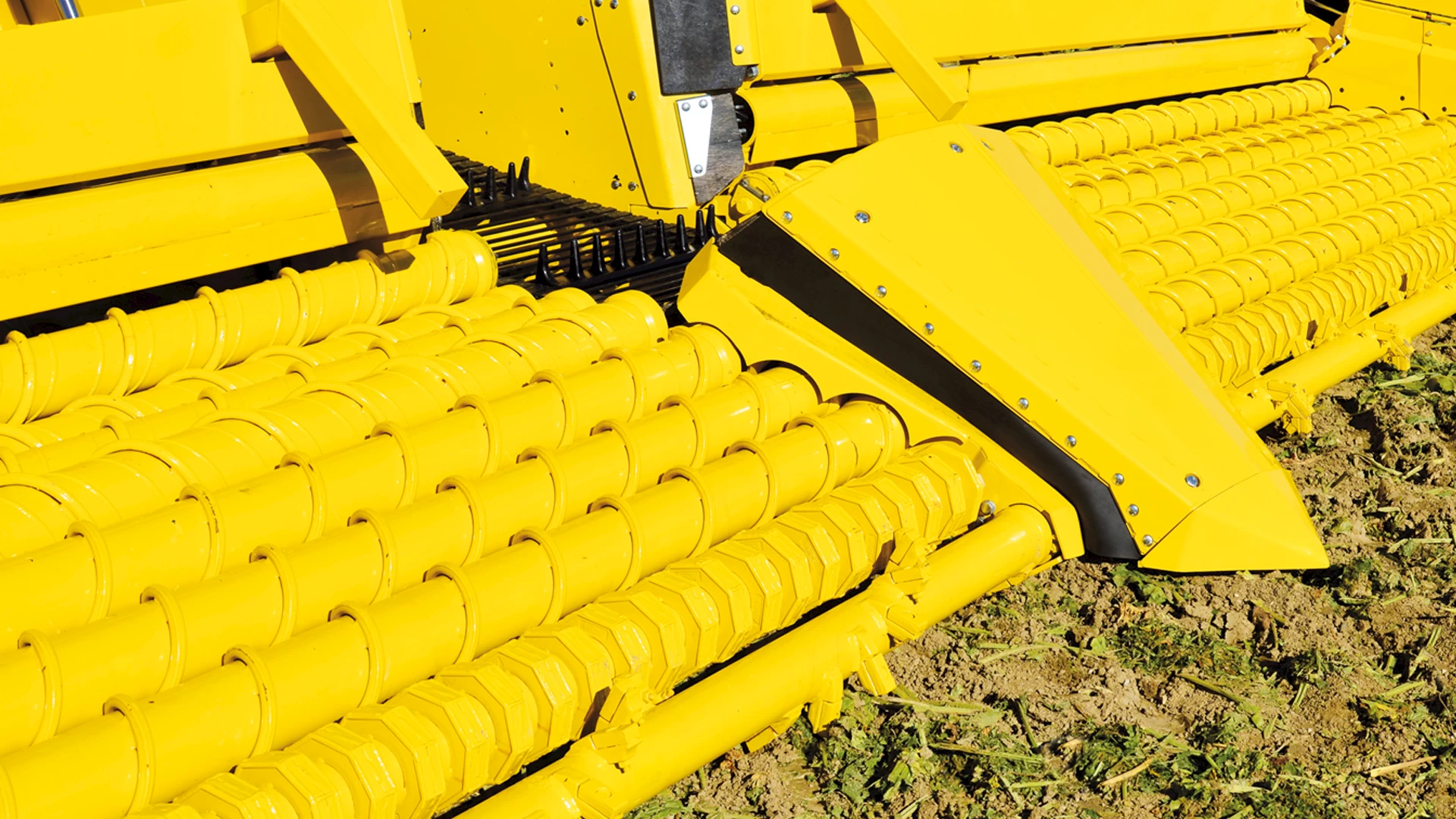
The central nose with its replaceable cone and a split cap has a free-of-play drive designed with conical bearing and automatic lubrication.
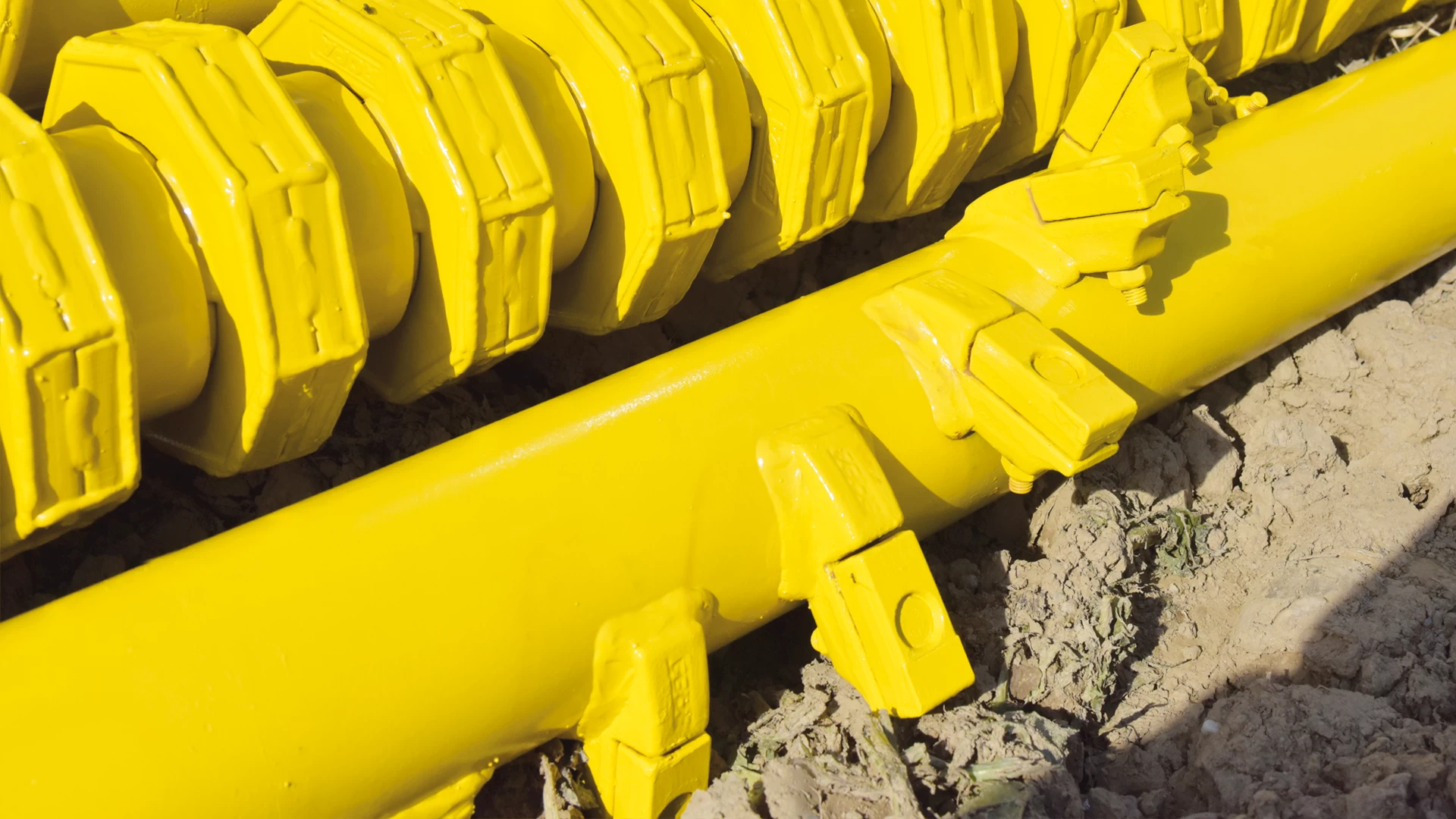
Wear-resistant, replaceable pickup fingers with carbide plate, cleaning rollers with forged octagonal discs and hard coating.
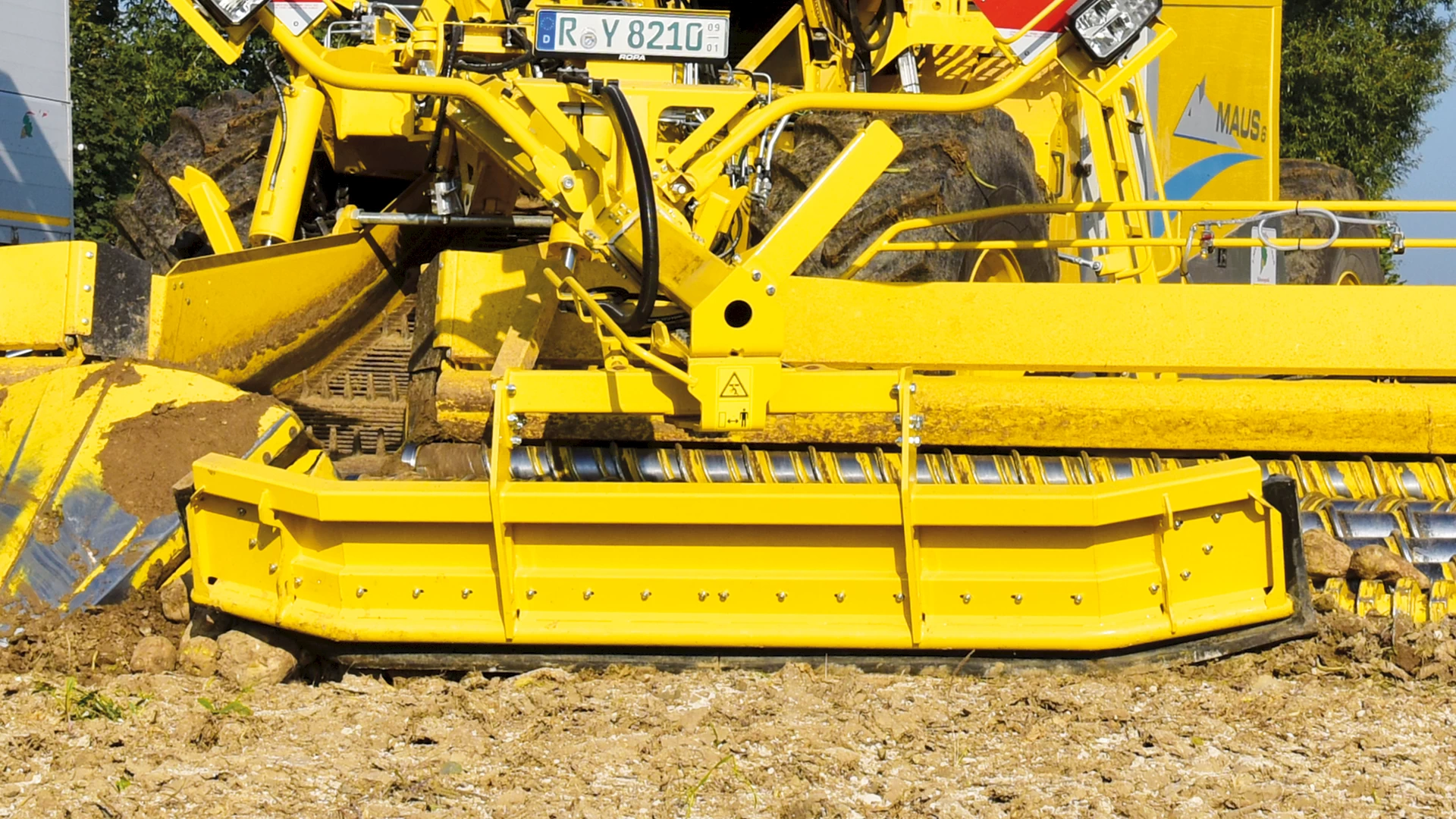
Pile pickup and residual beet pickup with angled corners and reinforced rubber lip.
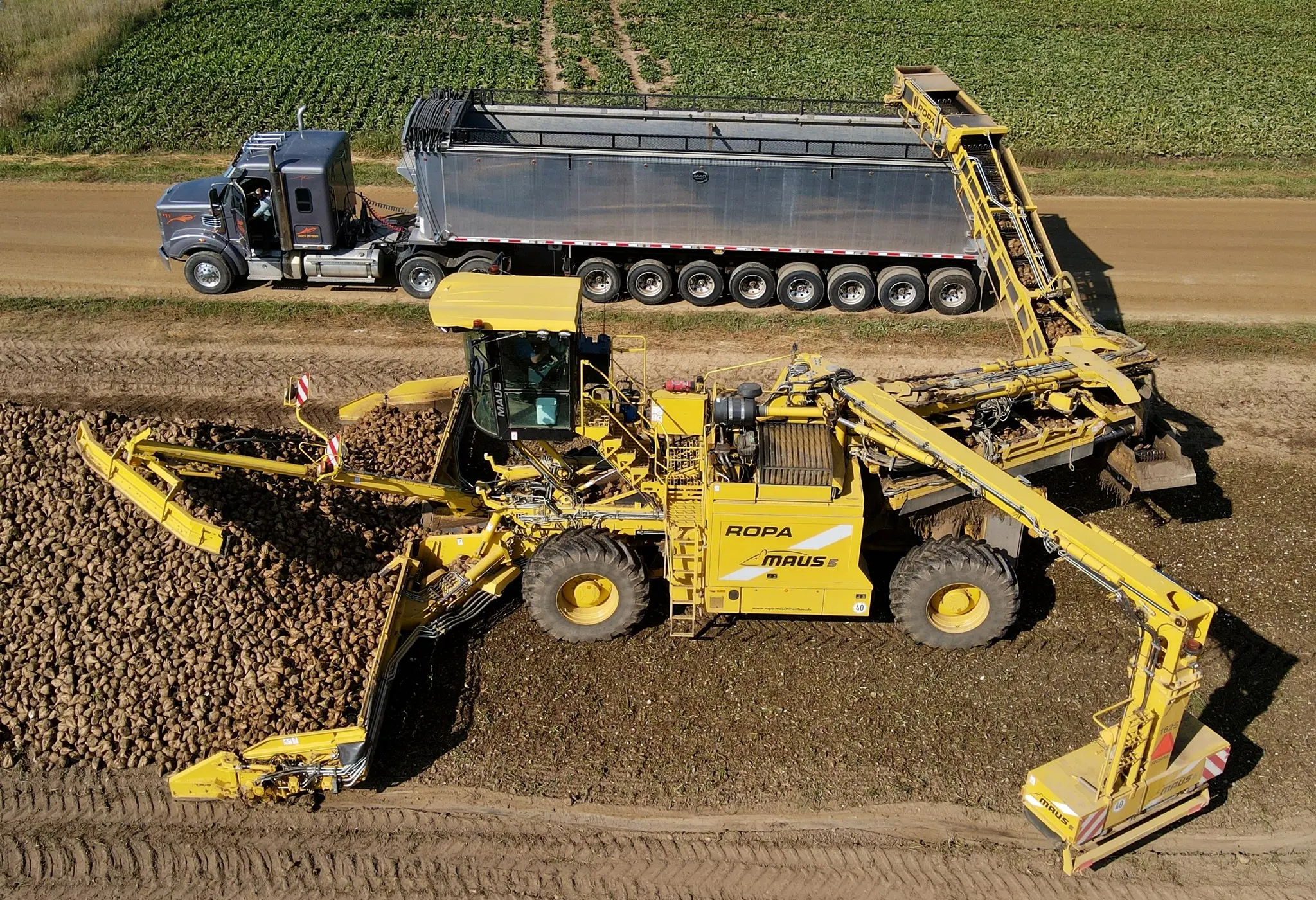
The intensity of required cleaning varies depending on the soil properties and the region of use. ROPA offers a proven and reliable solution for any demands.

900 mm wide sieve conveyor, 40 mm pitch, stepless speed adjustment (0-3 m/sec), automatic detection of blockages.
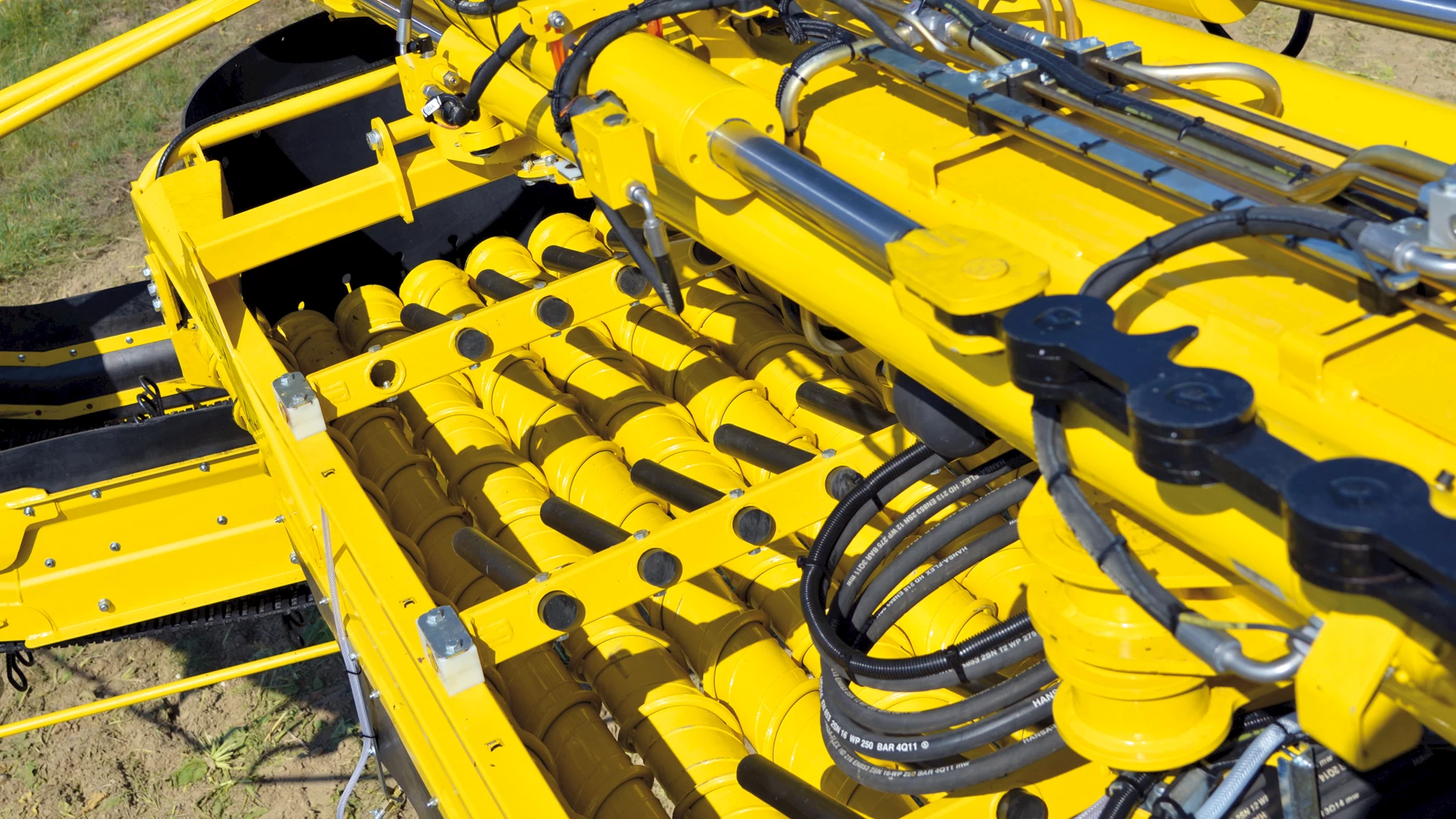
8 counter-rotating pinch rollers with hard coating, adjustable beet brake to regulate the cleaning intensity, stepless speed adjustment, automatic reversal in case of blockages, rollers identical in construction to pickup pinch rollers.
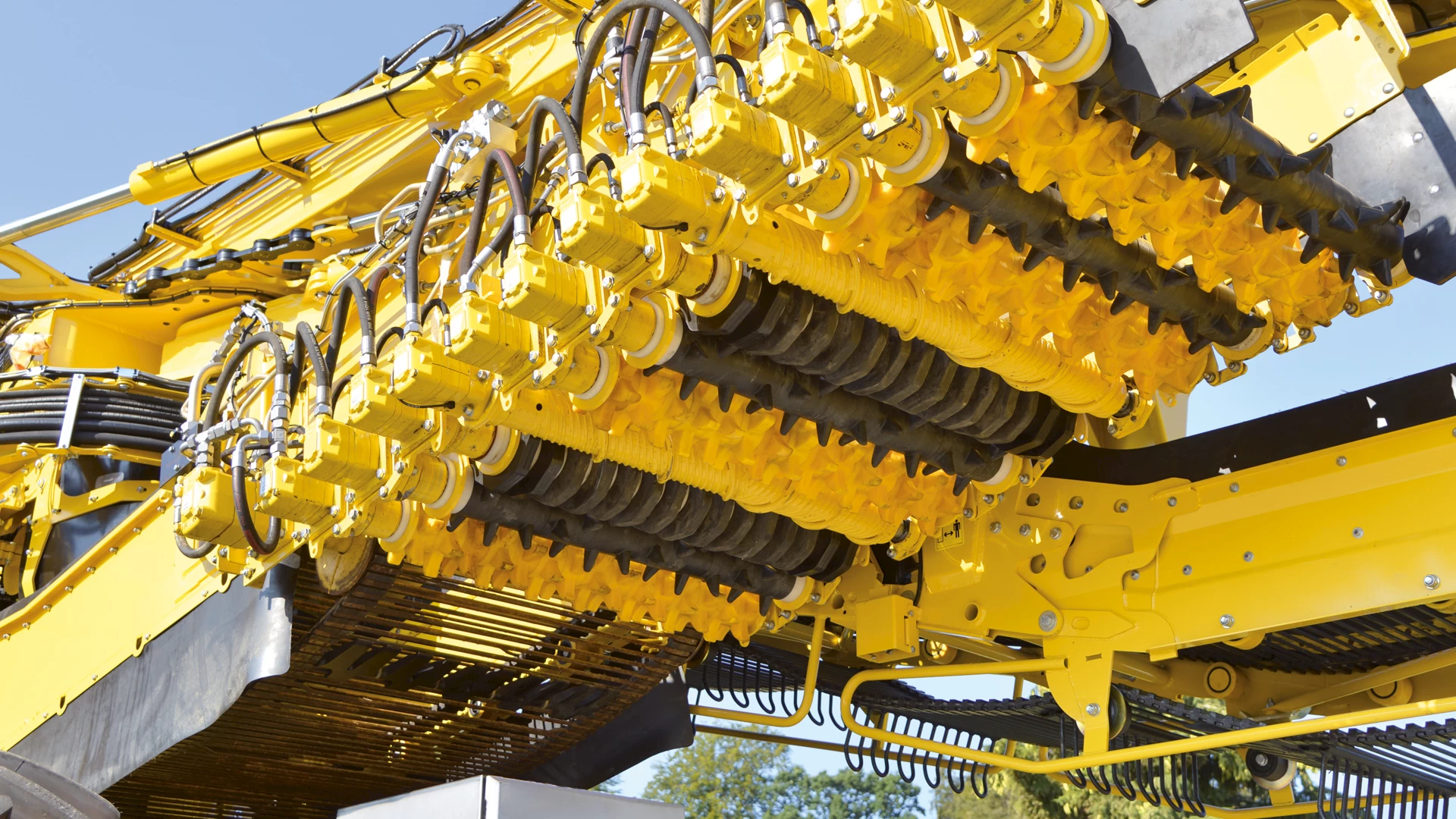
Sieve conveyor followed by roller cleaner, 10 PU cleaning rollers + 2 stone remover rollers, variable speed adjustment for cleaning rollers, variable adjustment of speed and direction of rotation for sprung stone remover rollers.
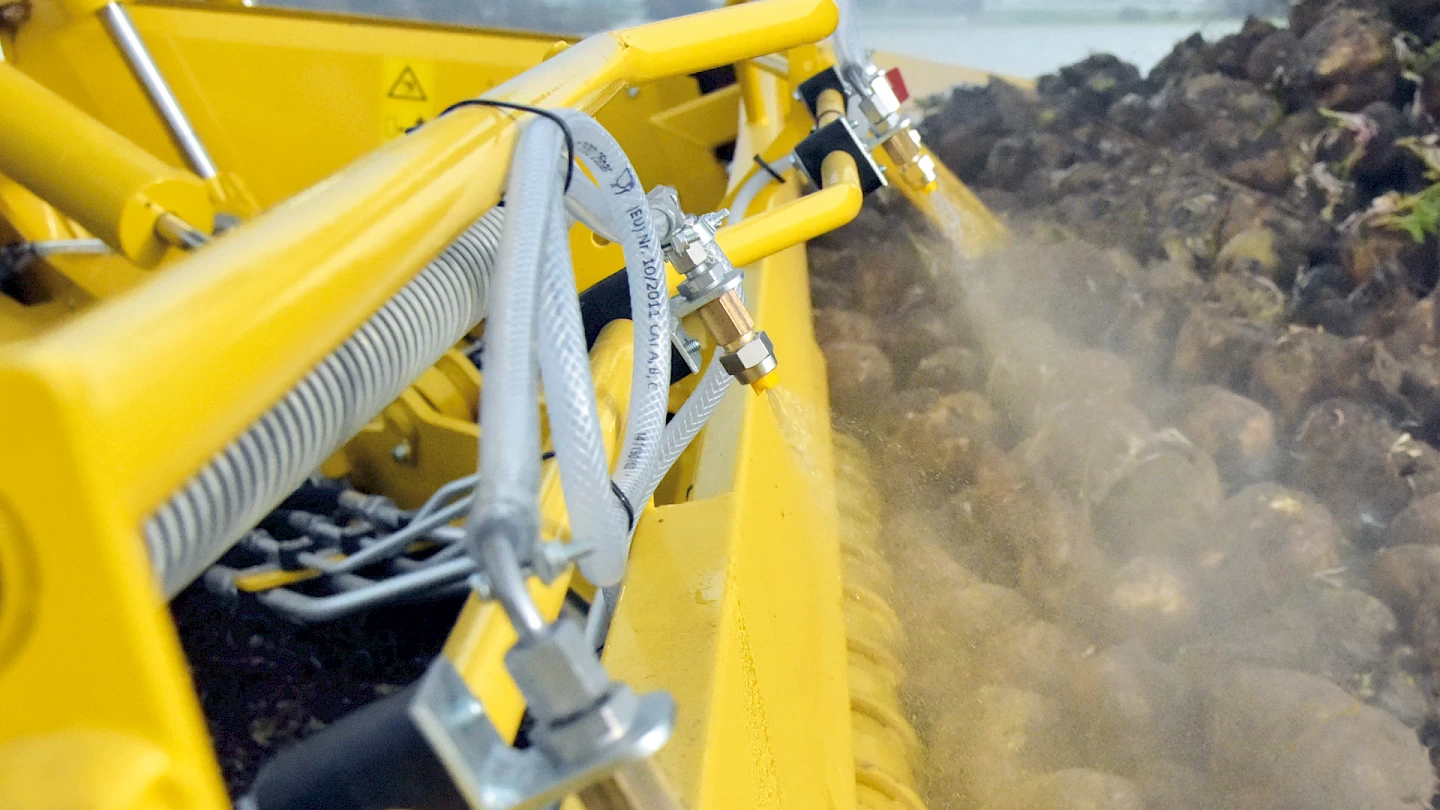
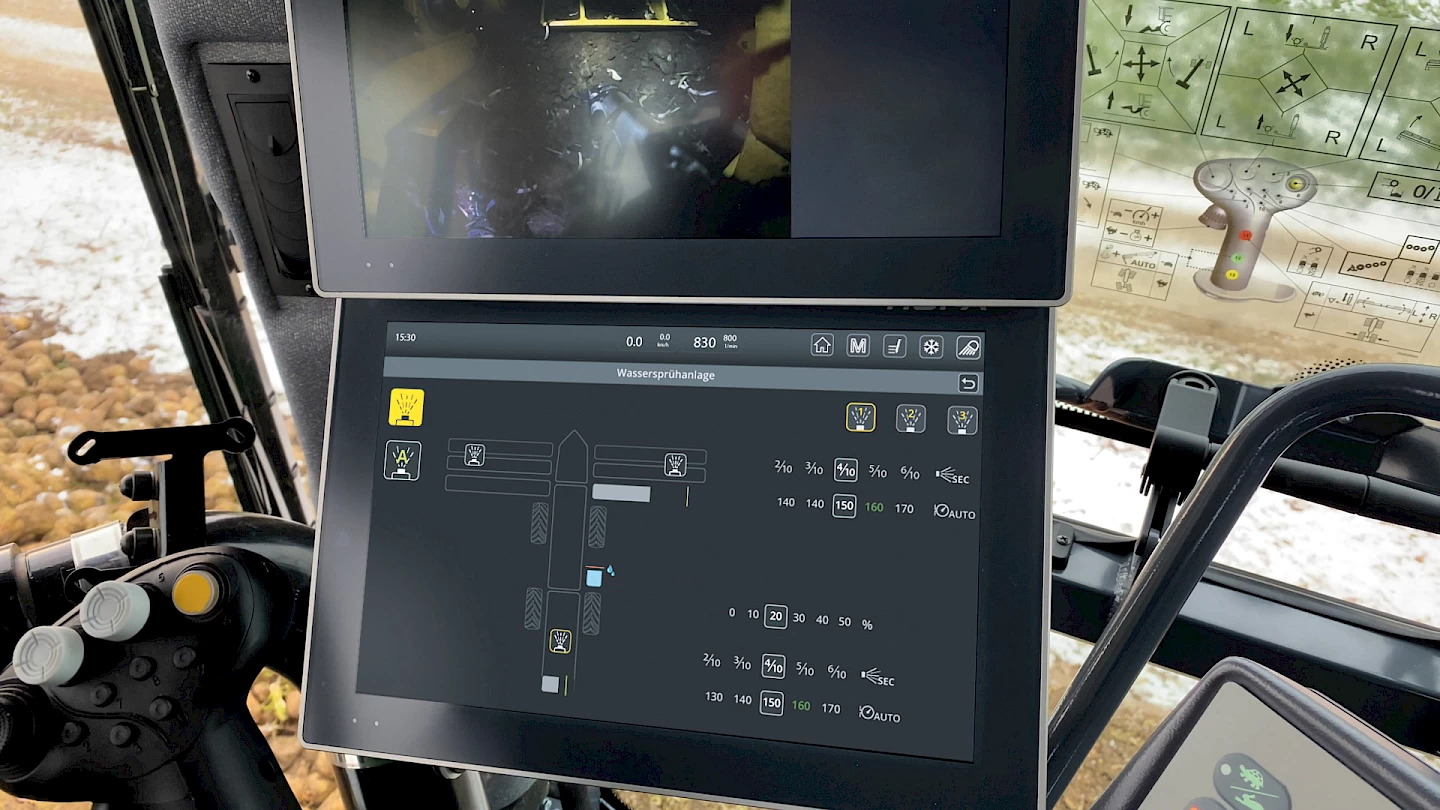
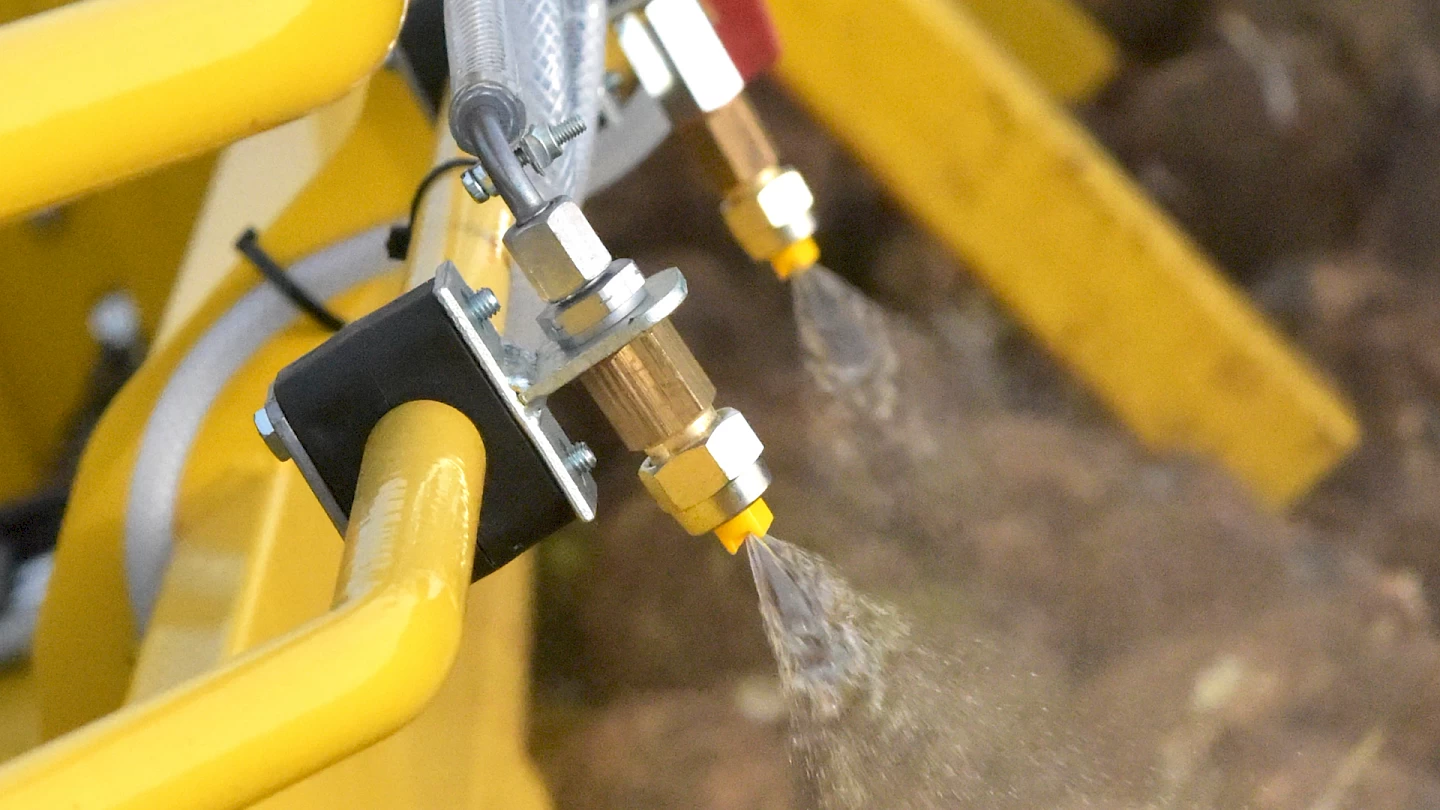
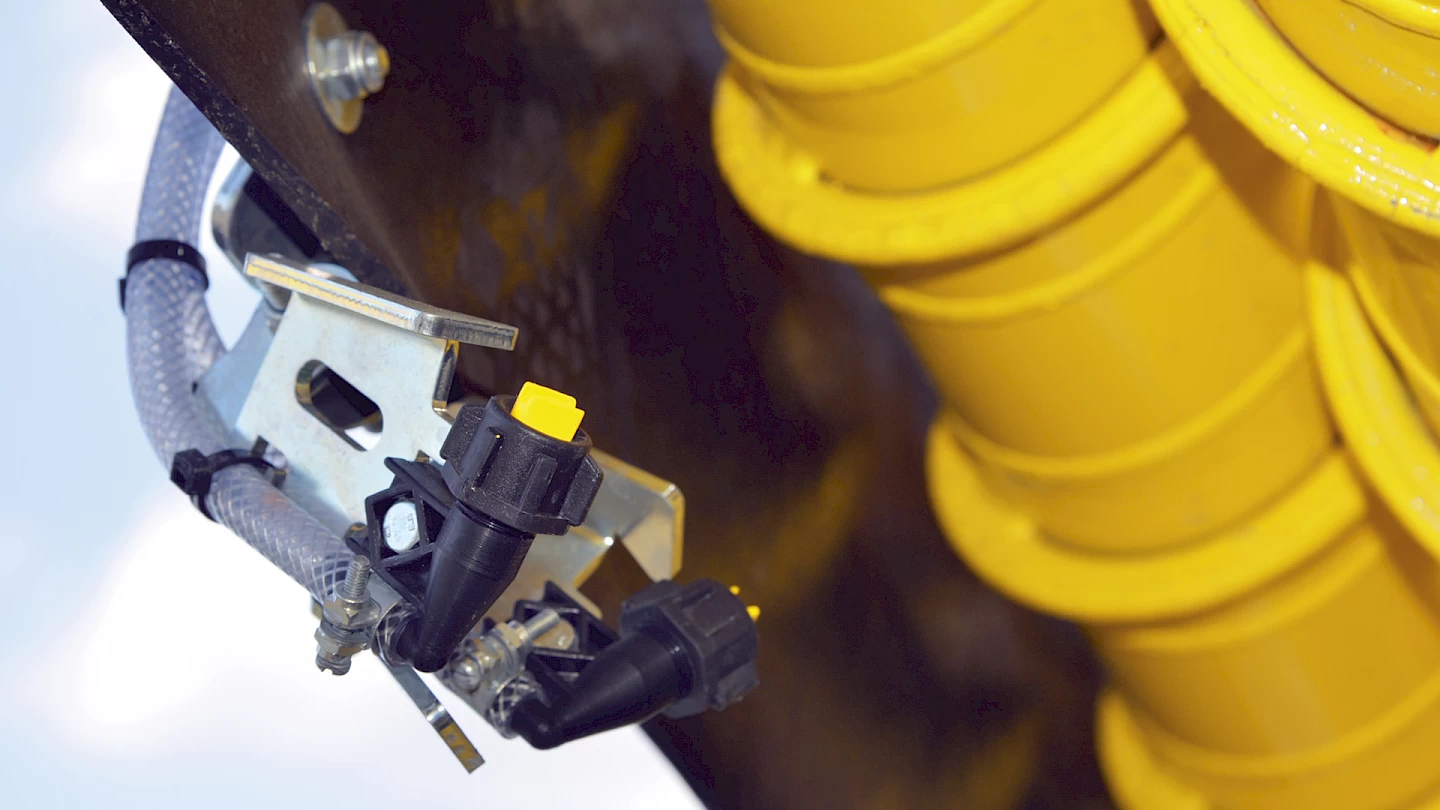
The water spray system moistens the rollers in order to increase the sliding properties in dry conditions and thus protect the beet. With extremely sticky soils, wetting the rollers helps to prevent soil adhesion. The operation of the water spray system has become even more intuitive and user-friendly and can be switched between automatic and interval mode.
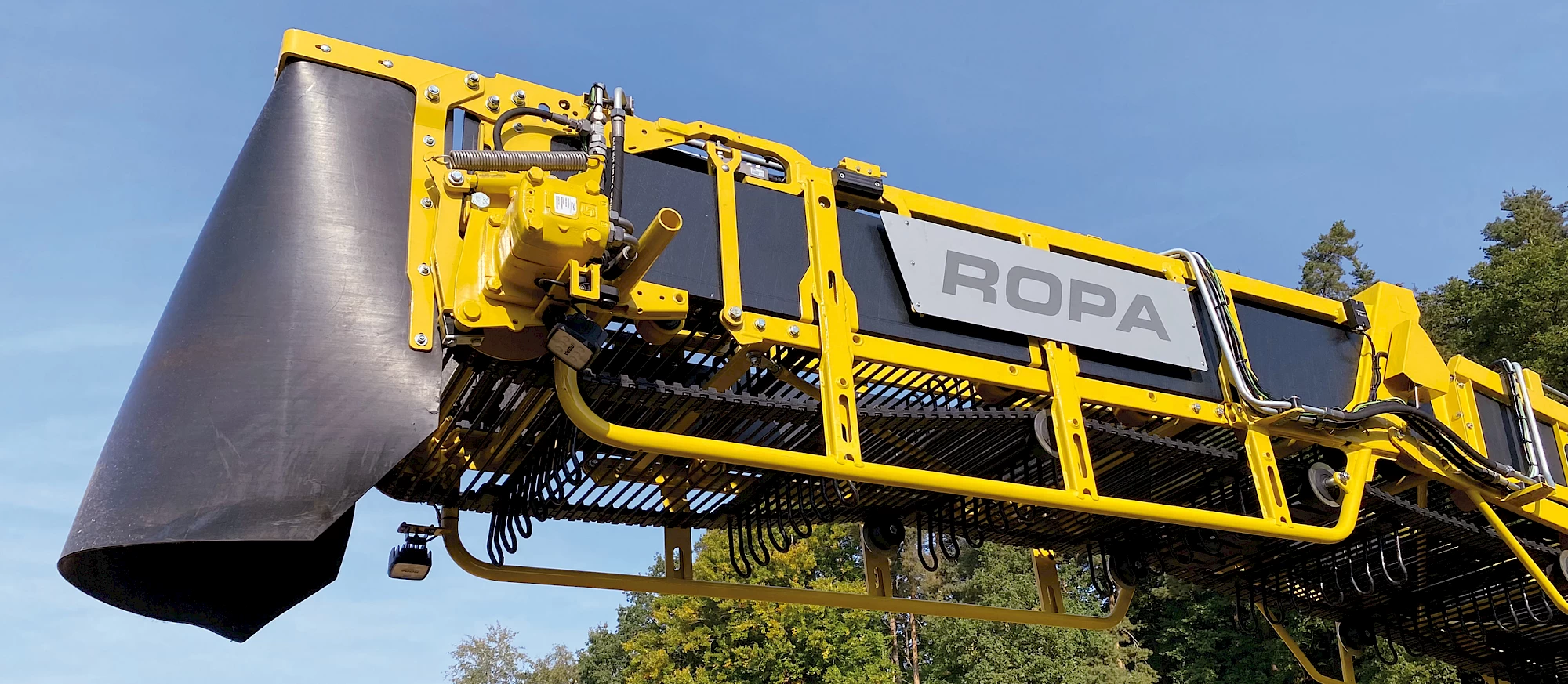
ROPA has also completely redesigned the belt scale system. And integrated a weighing frame into the truck conveyor articulation part by means of a new mechanical construction. Thanks to two CAN bus weighing cells, the wiring on the truck conveyor can be significantly reduced and the computer unit can be relocated to the safe central electrics cabinet. It increases operational safety and provides even more accurate weighing results.
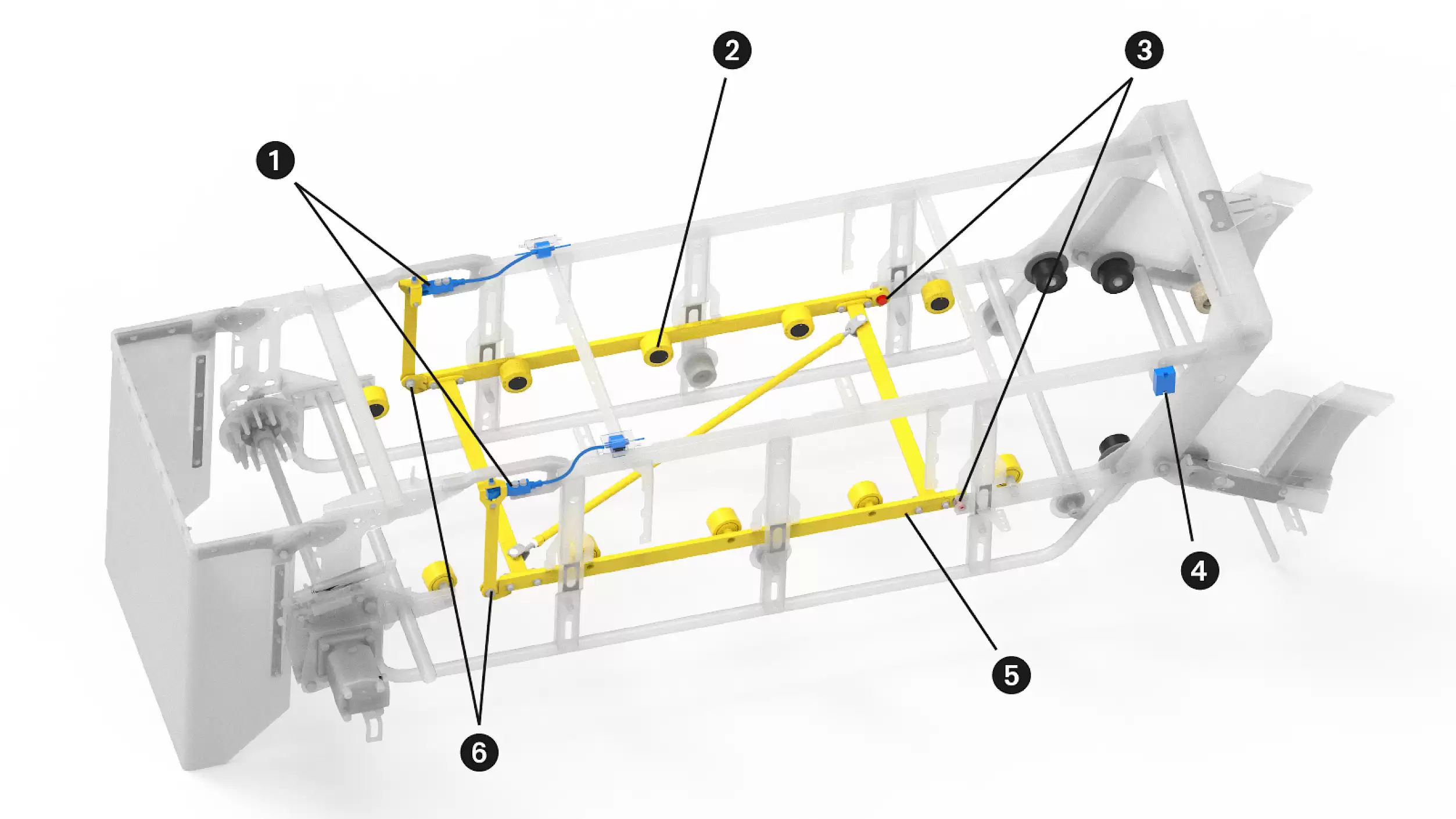
1. 2 CAN bus bending beam weighing cells
2. 6 support rollers on weighing frame
3. Pivot bearing
4. Inclination sensor
5. Weighing frame
6. Pivot bearing
Compared to previous systems, the belt load generated by the weight of the beets is introduced into the weighing frame via 2x3 support rollers and transferred to the two weighing cells. If necessary (e.g. after changing a support roller), the height of the fixed rollers can be adjusted very easily by means of an adjusting screw.
10 support rollers (also the rollers permanently bolted to the frame before and after the weighing area) are mounted in a self-cleaning manner by means of a slight inclination in order to be able to exclude incorrect forces. A modified truck conveyor frame in the area of the articulation pivot point now enables the beets to enter the weighing area more evenly/smoothly via four rollers instead of two.
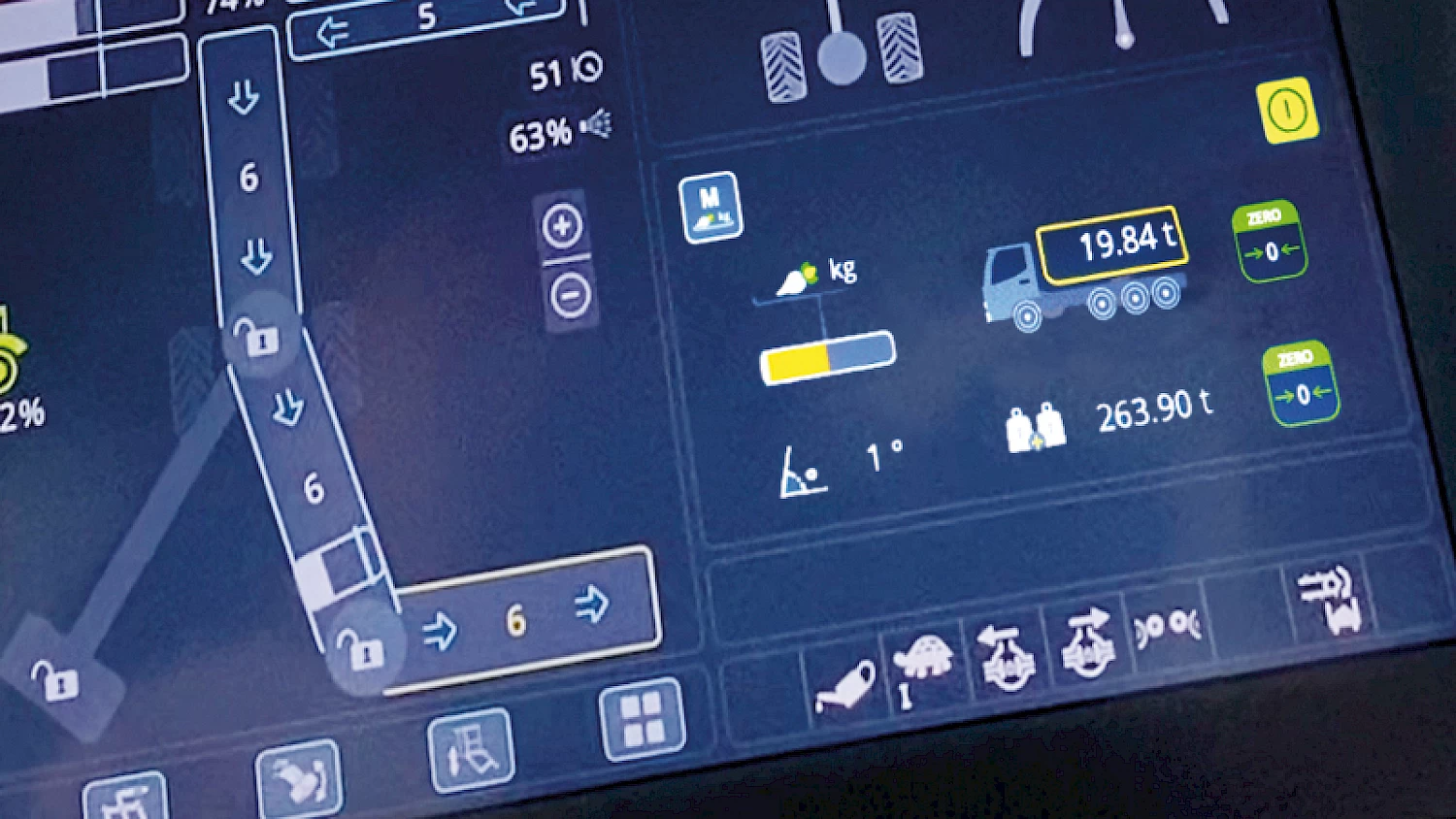
The weighing data of each load including calibration value, zero point adjustment, belt inclination/speed are automatically transferred to the ROPA R-Connect platform and can be evaluated and exported there.
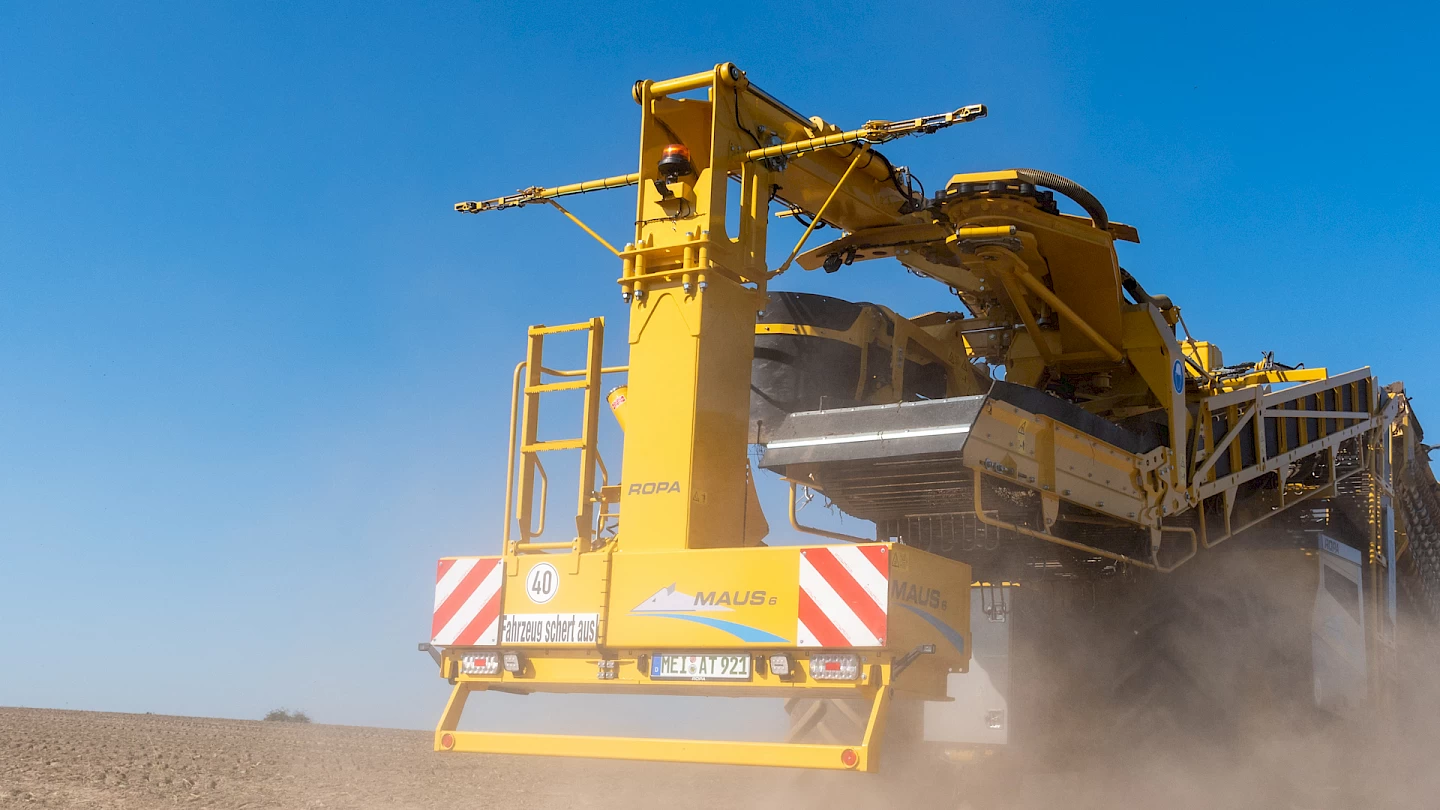
An absolutely safe and horizontal position and optimal traction on all 4 wheels are essential features of the ROPA counterweight concept, field-proven over 600 times.
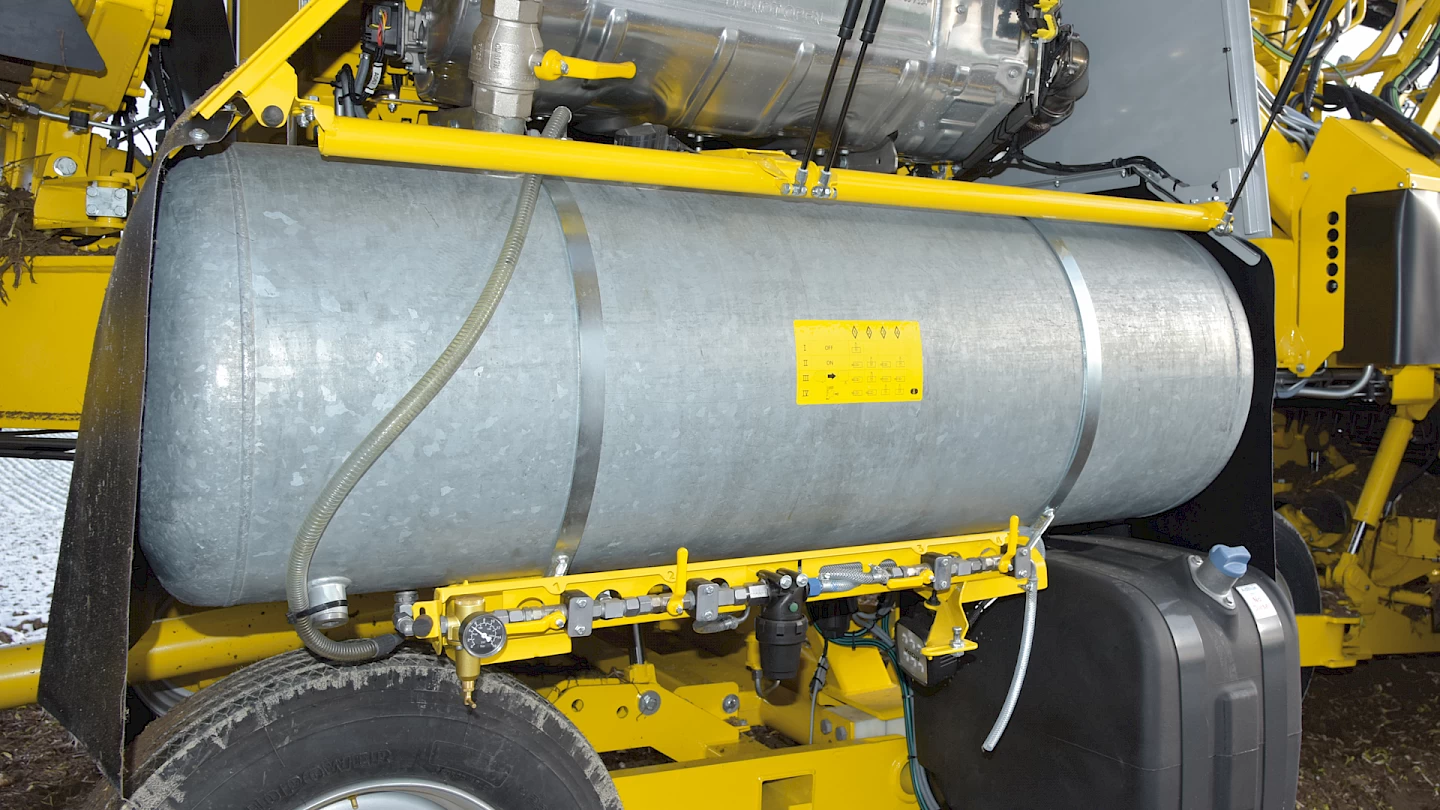
The counterweight arm, specially developed by the company’s founder Hermann Paintner, is made of special 700 fine grain steel and contributes to the impressive performance of the ROPA Maus 6 during loading while maintaining utmost stability. The counterweight arm is up to 9 m long and 4 m high and can be swung out together with the fuel tank, which serves as a counterweight to the truck conveyor, thus ensuring optimal balancing of the machine even at full 15 m truck loading width.
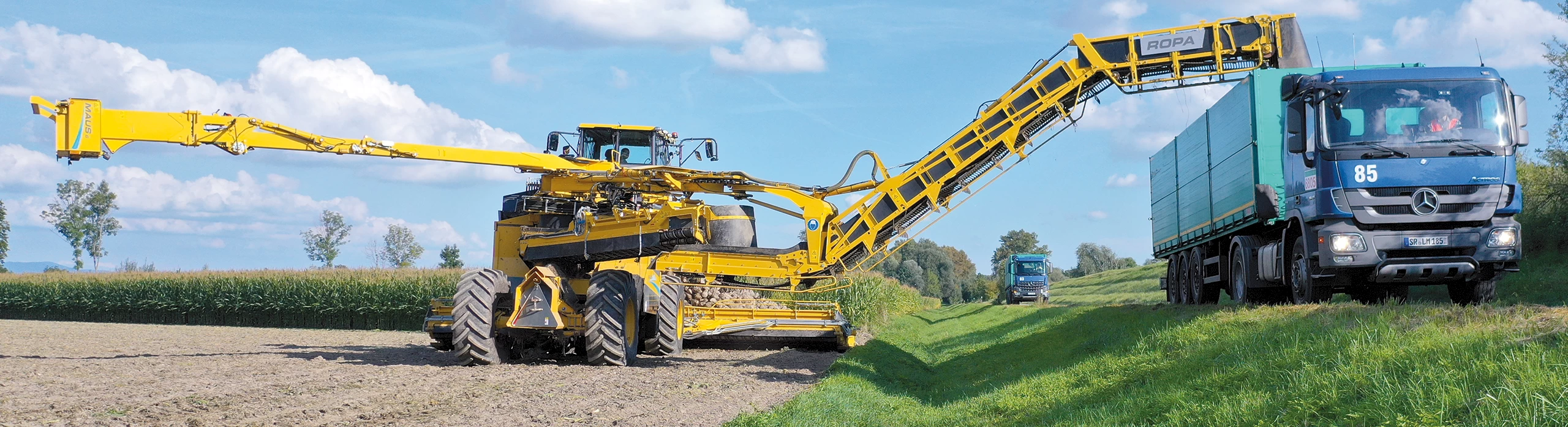
The weight of the loader is balanced by the counterweight arm at the center of the machine, leaving the frame even.
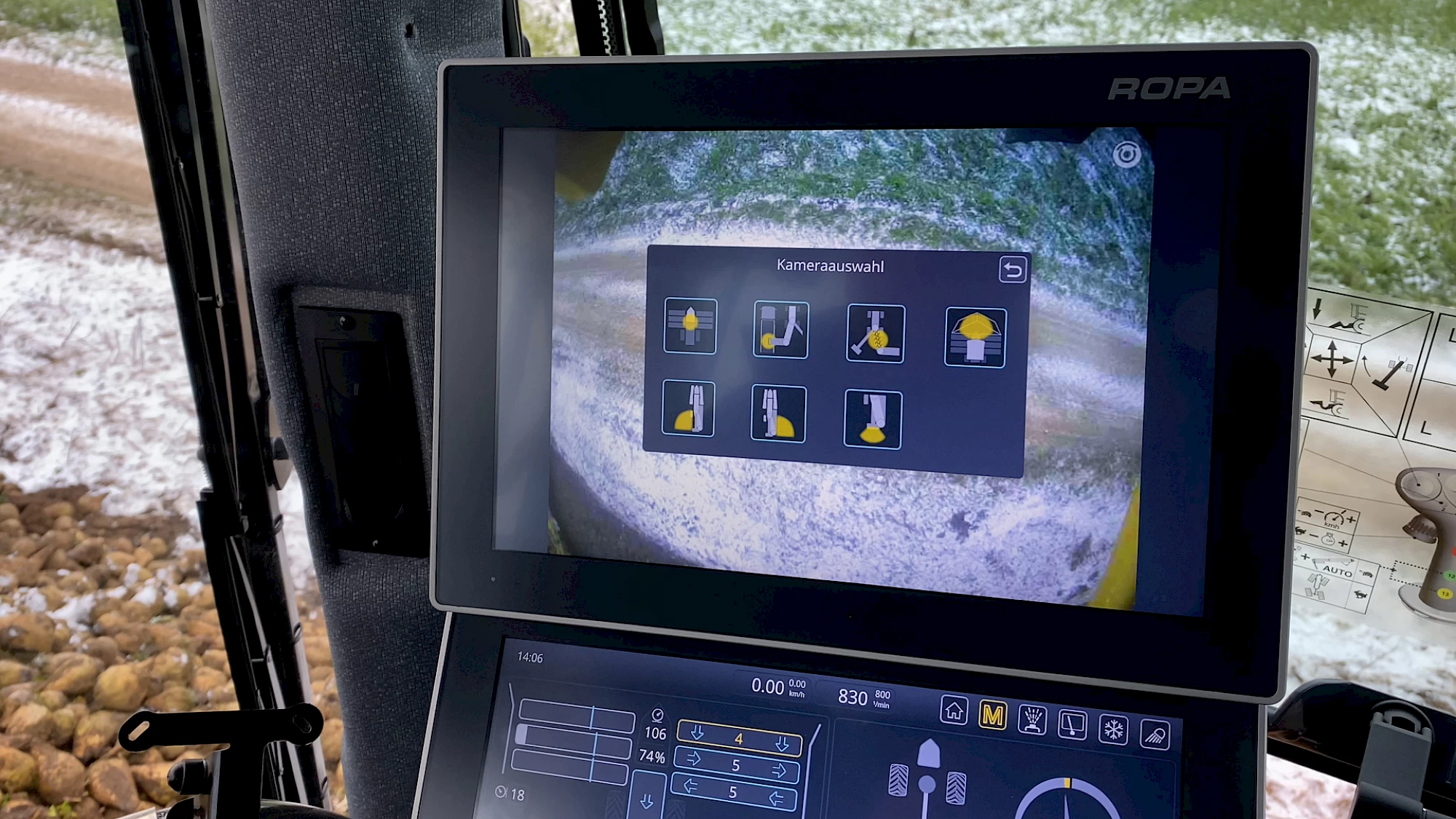
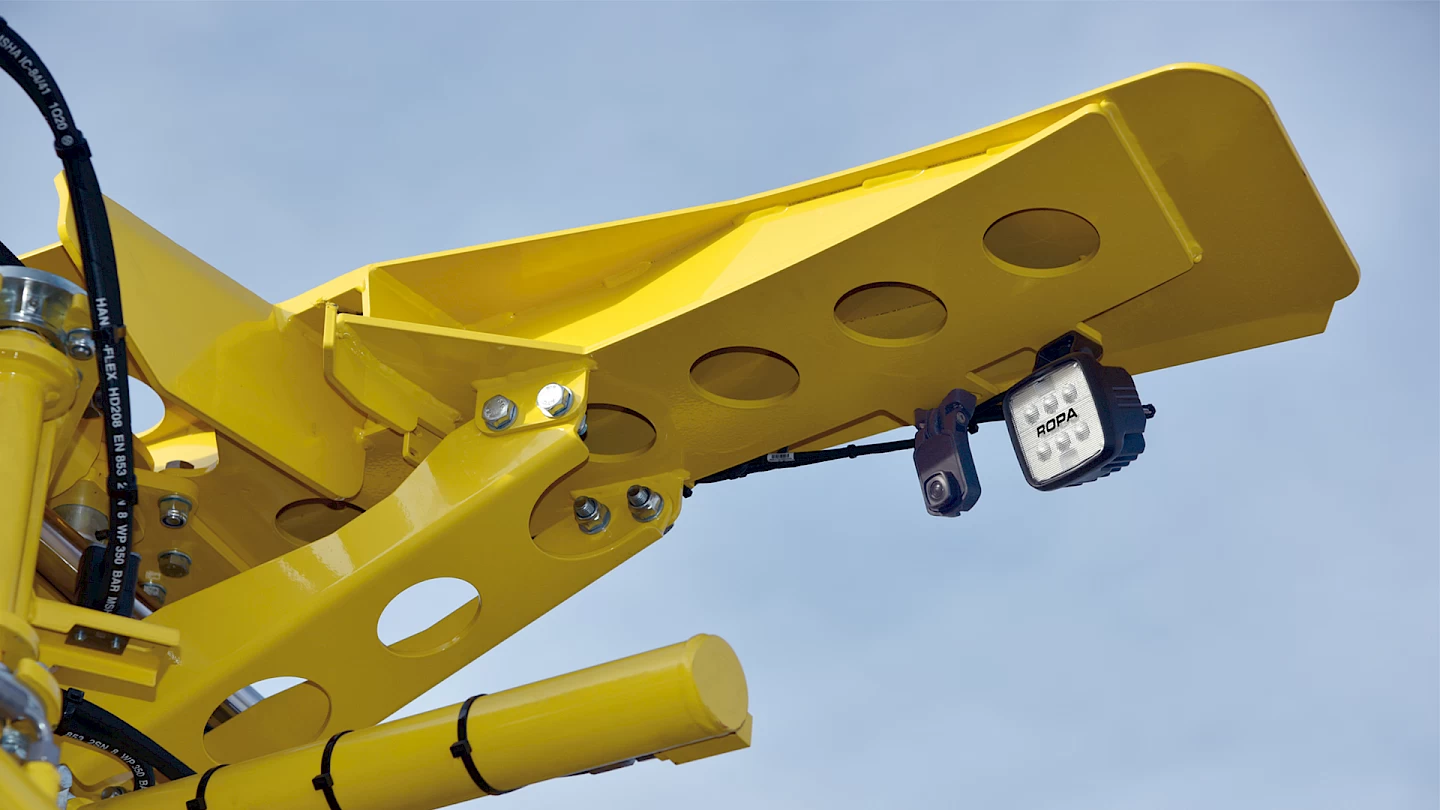
The Maus 6 has high-resolution digital cameras as standard. The digital cameras provide much better image quality - for this greater data quantity, an additional Ethernet network has been integrated into the machine. The Maus 6 now comes with a center mark camera and a rear view camera as standard. The additional cameras on the truck conveyor and the recleaner, as well as the new R-View with the back run camera and two additional side cameras for rear area monitoring, can be ordered optionally.